


Cannabis Brand Positioning: Strategies That Convert And the Ones That Don’t
The strongest cannabis branding strategies begin with positioning, not logos or advertising.
Most cannabis branding strategies begin in the wrong place. Operators start by discussing logos, packaging, websites, social media, influencers, or advertising when the more important question is far more fundamental: What do you want consumers to think about when they encounter your brand?
That is positioning, and positioning is not simply a marketing exercise. It is a business strategy that marketing communicates.
A strong position should influence the products you develop, the consumers you pursue, how you price those products, where you sell them, which partnerships you accept, how you enter new markets, and ultimately what your company becomes known for.
Marketing can amplify that position, but it cannot create one where none exists.
That distinction has become increasingly important as cannabis markets mature. Operators are competing against more products, more brands, declining prices, crowded dispensary shelves, and consumers who often have difficulty distinguishing one company from another. Under those circumstances, simply increasing marketing activity is rarely the answer. The better question is whether your cannabis brand marketing strategy gives consumers a compelling reason to choose you in the first place.
For operators trying to determine how to market your cannabis business, positioning is where that conversation should begin. The companies that consistently stand out are rarely trying to say everything to everybody. They know who they are, who they serve, and why they deserve a place in the consumer’s mind.
The following cannabis branding strategies are designed around that principle.
Key Takeaways

- Brand positioning is a business strategy, not simply a marketing strategy. It should inform product, pricing, distribution, partnerships, expansion, and communications.
- Geography matters. A cannabis branding strategy that succeeds in Seattle may require a very different execution in New York, Ohio, or another emerging market.
- Strong cannabis brand positioning gives consumers something specific to remember rather than another collection of products, features, and claims.
- Consistency matters across every touchpoint, from packaging and websites to dispensary execution and strategic partnerships.
- The most effective cannabis branding strategies build preference, not simply awareness. Preference is what ultimately drives repeat purchase, pricing power, and long-term brand value.
Your Location Impacts Your Cannabis Branding Strategy
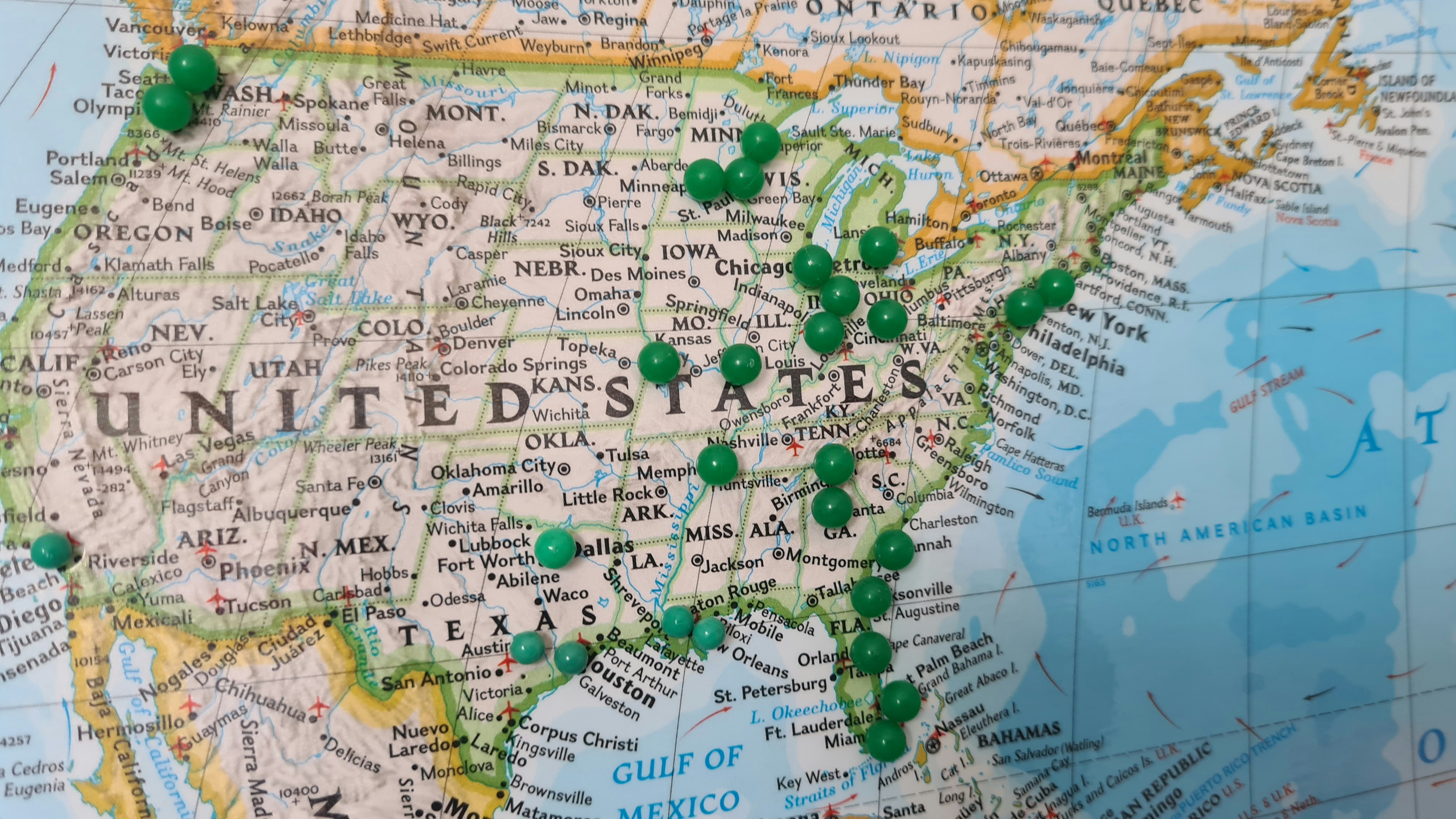
Cannabis may be discussed as a national industry, but commercially it remains a collection of highly distinct state markets.
Regulations vary. Supply conditions vary. Retail structures vary. Consumer sophistication varies. The competitive landscape can change dramatically simply by crossing a state line. Any effective cannabis branding strategy therefore has to consider geography as part of positioning rather than treating geographic expansion as a distribution exercise.
Seattle provides a useful example. Washington has had an adult-use market for more than a decade, which means many consumers have considerable product knowledge and an enormous amount of choice. A generic claim of “premium cannabis” does very little in a market where countless companies are making essentially the same promise. Brands need greater specificity. That may mean establishing authority around cultivation methods, particular product experiences, genetics, sustainability, value, or a lifestyle that resonates with a clearly defined consumer.
New York creates a different challenge. The legal adult-use market is considerably younger, and consumers range from sophisticated legacy-market users to people walking into a licensed dispensary with relatively little understanding of products, formats, potency, cannabinoids, or dosing. Under those circumstances, a cannabis brand positioning strategy built around clarity and education may be more valuable than one built entirely around connoisseurship. Helping someone make a confident decision can itself become part of the brand experience.
Ohio presents yet another set of considerations. As its adult-use market develops, familiarity, reliability, value, retail relationships, and consumer education can play very different roles than they do in a mature West Coast market. This is why I am always cautious when companies tell me that a brand “works” in one state and therefore should work somewhere else. What they usually mean is that the brand has succeeded under one particular combination of consumer expectations, competition, pricing, retail dynamics, and product availability.
The lesson is not that brands should reinvent themselves every time they enter a new market. They should not. The core identity needs to remain recognizable. What should change is the way that identity is expressed. Understanding how to market your cannabis business requires knowing which parts of the brand are non-negotiable and which aspects of the message, product assortment, pricing, retail strategy, and consumer education need to be localized. The strongest cannabis branding strategies preserve the brand while adapting the execution.
6 Cannabis Branding Strategies and Ideas That Position You Strongly

1. Own Something in the Consumer’s Mind
One of the most common mistakes I see is brands trying to be everything to everyone. The logic sounds reasonable: the broader your appeal, the larger your potential market. In practice, the opposite is often true. Consumers are much more likely to remember a brand that becomes associated with something specific than one attempting to occupy every available position.
That “something” does not necessarily have to be a product category. In fact, it is often stronger when it is not. A brand might become associated with sleep, social occasions, outdoor culture, design, sustainability, premium craftsmanship, accessibility, or another clearly defined consumer need or worldview. This is where the best cannabis branding ideas move beyond deciding what the package looks like and begin determining what the company actually represents.
This is particularly important for someone figuring out how to start a cannabis brand. Too many entrepreneurs begin with the products they want to manufacture and build the brand around them afterward. I prefer reversing that process. Determine the position you want to occupy, understand the consumer you intend to serve, and then ask which products credibly deliver against that position. Products can change considerably over time. The position, if chosen well, can become a much more durable asset.
What should you avoid? Being so broad that you become interchangeable. “High quality,” “premium,” “authentic,” and “great cannabis” are not meaningful positions unless you define them in a way competitors cannot easily claim for themselves.
2. Develop a Distinct Point of View
Brands become more interesting when they have something to say. That does not mean every company needs a social mission, a cause, or an elaborate manifesto. It means the company should have a perspective that gives consumers some understanding of why it exists beyond putting another eighth, pre-roll, or vape cartridge on the shelf.
A good cannabis brand marketing strategy communicates that perspective consistently. Perhaps the company believes cannabis should be easier to understand. Perhaps it celebrates cannabis culture rather than hiding from it. Perhaps it is built around craftsmanship, wellness, creative expression, or normalizing responsible consumption. The specific point of view matters less than whether it is relevant to the consumer, credible for the company, and distinctive within the market.
This is also where many companies confuse personality with positioning. Clever copy, an irreverent social media voice, or an unusual package can certainly make a brand more interesting, but personality alone is not a strategy. The personality has to reinforce an underlying idea. Without that foundation, brands frequently jump from trend to trend because there is nothing strategically anchoring the communications.
Strong cannabis brand positioning creates that anchor. It gives marketers a filter for deciding what to say, product teams a framework for deciding what fits, and leadership a reason to reject opportunities that may generate short-term revenue while weakening the brand over time.
3. Educate Before You Sell
Cannabis remains an unusual consumer category because enormous differences in knowledge exist among customers standing in the same dispensary. One consumer may be evaluating terpene profiles, genetics, extraction methods, and minor cannabinoids while the person standing next to them simply wants to know whether a particular product will help them relax without making them uncomfortable.
That gap creates an opportunity. Education can be one of the most effective cannabis branding strategies because helping consumers make better decisions builds credibility before asking them to purchase anything. It also gives brands something genuinely useful to talk about rather than filling every communication with another promotion.
The key is understanding that education does not mean overwhelming consumers with technical information. Effective education reduces complexity. It answers the questions people actually have, uses language appropriate to their level of knowledge, and makes the category easier rather than harder to navigate. Depending on the brand, that could happen through packaging, digital content, email, retail materials, budtender training, social media, or broader cannabis content marketing services.
What does not work is education that is really advertising wearing a lab coat. Consumers can recognize when every explanation conveniently concludes that the company’s own product is the answer. Useful information earns trust precisely because it provides value before demanding a transaction.
4. Make the Brand Consistent Everywhere It Appears
A brand is not built only through communication. It is built through accumulated experiences. Packaging may create the first impression, but websites, social media, dispensary displays, customer service, product quality, promotions, partnerships, and even the way retail employees describe the company can reinforce or contradict that impression.
This is why consistency plays such an important role in cannabis branding strategies.
Consistency does not mean repeating the same sentence everywhere. It means that everything the company does feels as though it comes from the same brand. A consumer encountering your product at a dispensary should experience the same basic promise they encountered online. A partnership should make intuitive sense given what the brand represents. A new product should strengthen the position rather than simply add another SKU.
The problem becomes particularly visible when brands rely on multiple outside partners. An agency may control the website, another group may run social media, an internal team may handle packaging, and state-level licensees may execute local marketing. Without clear cannabis brand messaging and governance, each party begins interpreting the brand independently. Eventually, what started as one brand becomes several slightly different versions of it.
This is where cannabis brand identity consulting services and broader cannabis brand strategy services can be useful—not because companies need more marketing materials, but because they need a common strategic framework governing how the brand appears and behaves across channels and markets.
5. Design for the Market You Are Entering, Not the Market You Came From
Successful brands can become victims of their own success. Once an approach works in one market, there is a natural temptation to assume the same formula will work somewhere else. Cannabis makes that assumption particularly dangerous because state markets often develop under dramatically different conditions.
A brand built in Washington may have grown up speaking to experienced cannabis consumers surrounded by abundant supply and intense competition. Entering New York or Ohio with exactly the same assortment, language, pricing architecture, and retail strategy assumes consumers there share the same frame of reference. They may not.
Effective cannabis brand positioning separates identity from execution. The identity should remain stable enough that the brand is recognizable wherever it operates. Execution should be flexible enough to account for local consumers and market conditions. That may mean emphasizing different product benefits, providing more education, modifying the assortment, adjusting price architecture, working with different types of partners, or investing differently in cannabis brand visibility.
This principle becomes even more important as companies expand through licensing. Your licensee is not simply producing products; it is representing your brand in an environment you may not control directly. A successful expansion strategy therefore requires understanding the local market and selecting partners capable of translating the brand without distorting it. Copy-and-paste expansion is easier. Thoughtful adaptation is usually more effective.
6. Treat Your Brand as a Commercial Asset
Perhaps the biggest shift I would encourage cannabis operators to make is to stop thinking about brand exclusively as a marketing expense. A well-positioned brand is a commercial asset, and the value of that asset should appear throughout the business.
Strong brands can support pricing power because consumers perceive meaningful differences between them and alternatives. They can improve retail relationships because buyers have a clearer understanding of where the brand fits on the shelf. They can make partnerships more attractive because prospective collaborators understand what the brand brings to the relationship. They can support licensing and geographic expansion because the intellectual property carries recognizable meaning beyond the products produced in a single facility.
That is why I view cannabis branding and marketing services as only part of the larger conversation. Marketing is the mechanism through which much of the brand is communicated, but the strategy should also connect to commercialization, sales, product development, distribution, partnerships, and expansion. If branding sits exclusively inside the marketing department, the organization may be leaving much of its value unused.
The ultimate objective of cannabis branding strategies should not simply be generating more impressions or followers. Those metrics can be useful, but they are intermediaries. The more important questions are whether consumers prefer the brand, retailers want to carry it, partners want to work with it, customers return to it, and the company has greater strategic options because the brand exists.
Why Do Many Cannabis Branding Strategies Fail to Convert?

Many cannabis branding strategies fail because operators begin executing marketing before establishing strategic clarity. When sales are soft, the instinct is often to advertise more, redesign something, introduce another promotion, launch another product, hire influencers, or post more frequently on social media. Those activities may create attention, but attention and preference are not the same thing.
The underlying problem is often weak cannabis brand positioning. If consumers cannot quickly understand why your brand is different, increasing the volume of communication simply exposes more people to an unclear proposition. This is one reason I resist the idea that every brand problem is really a visibility problem. Sometimes the question is not how to improve cannabis brand visibility online. Sometimes the question is whether increasing visibility will matter when the brand has not given consumers anything distinctive to remember.
Operators also have to recognize the realities of the category. Price compression can push brands toward constant discounting. Retailers can have enormous influence over consumer decisions. Advertising restrictions limit traditional marketing options. Product quality can vary because of cultivation or manufacturing issues. Expansion into another state can put execution into the hands of a licensee. All of these factors can affect conversion, which means a cannabis branding strategy cannot operate independently of the rest of the business.
Common Cannabis Brand Positioning Mistakes

- Trying to appeal to every cannabis consumer instead of identifying a meaningful target.
- Building the strategy around THC percentage, price, or other attributes competitors can easily match.
- Copying the visual language or positioning of successful competitors.
- Changing the message whenever a new trend emerges.
- Mistaking attractive packaging for meaningful differentiation.
- Expanding into new markets without adapting to local consumers and competitive conditions.
- Creating marketing independently from product, sales, retail, and commercialization strategy.
- Measuring the brand primarily through followers, impressions, or engagement instead of preference and business performance.
These mistakes have something important in common: they tend to prioritize activity over clarity. Cannabis companies operate in a difficult environment, and there is constant pressure to do something—launch, promote, discount, expand, redesign. But more activity does not necessarily produce a stronger brand. Sometimes the most valuable strategic decision is determining what not to do because it falls outside the position you are trying to build.
The Bottom Line

As cannabis becomes more competitive, the differences among products will continue to narrow in many categories. Competitors can source similar genetics, create comparable formats, copy features, match prices, and imitate packaging remarkably quickly. What is more difficult to replicate is a position that has been consistently established in the consumer’s mind.
That is the real purpose of cannabis branding strategies. The objective is not simply to make a company recognizable. It is to make the brand meaningful enough that recognition influences behavior. Strong cannabis brand positioning creates a reason to choose, a reason to return, and eventually a reason to prefer the brand even when other options are less expensive or more convenient.
For operators deciding how to market your cannabis business, I would therefore begin before the marketing plan. Define who you want to serve, determine what you want to represent, understand the market in which you are competing, and make sure the rest of the organization can deliver against that promise. Once those decisions have been made, marketing becomes significantly more powerful because it has something meaningful to communicate.
Brand positioning is not a marketing strategy. It is a business strategy that marketing communicates. The cannabis companies that understand that distinction will have a much better chance of building brands that do more than attract attention. They will build brands capable of creating preference, supporting growth, and becoming valuable commercial assets.
Frequently Asked Questions

The most effective cannabis branding strategies create meaningful differentiation rather than simply increasing promotion. Clear positioning, consumer education, consistent execution, market-specific adaptation, and treating the brand as a commercial asset all help turn awareness into preference.
Start by identifying the consumer you want to serve, the need or idea you want the brand to own, and why your company can credibly deliver against that position. Strong cannabis brand positioning should then guide product development, pricing, distribution, partnerships, marketing, and customer experience rather than functioning only as a communications statement.
Cannabis markets differ in regulations, competition, supply, pricing, retail structure, consumer sophistication, and culture, so execution should reflect local conditions. The core cannabis branding strategy should remain recognizable while messaging, product mix, education, pricing, and go-to-market tactics are adapted to the market.
The strongest cannabis branding ideas usually begin with a distinct consumer need or point of view rather than a logo or product format. A new brand might focus on education, a specific occasion or lifestyle, premium craftsmanship, accessibility, sustainability, or another position that is both relevant to consumers and difficult for competitors to duplicate.
Cannabis brand positioning defines the place you want the brand to occupy in the market and in the consumer’s mind. Cannabis brand messaging is the language used to communicate that position. Messaging can evolve across audiences and channels, but it should consistently reinforce the underlying position.
About the Author

David Paleschuck is a brand strategist, author, and partnership executive with more than 25 years of experience helping brands build trust, create cultural relevance, and scale through strategic growth. His career spans leadership roles at American Express, MasterCard, Microsoft, and the cannabis industry, where he has spent the past 14 years advising founder-led brands on strategy, licensing, partnerships, commercialization, and market expansion. He is the author of the Amazon bestselling book Branding Bud: The Commercialization of Cannabis and writes frequently about branding, consumer behavior, trust, and emerging consumer markets.
READY TO SCALE YOUR BRAND?
Whether you need compliant paid media, SEO, email, content marketing, creative, or a full-service growth partner, we'll build a strategy tailored to your goals—and deliver measurable results.


